
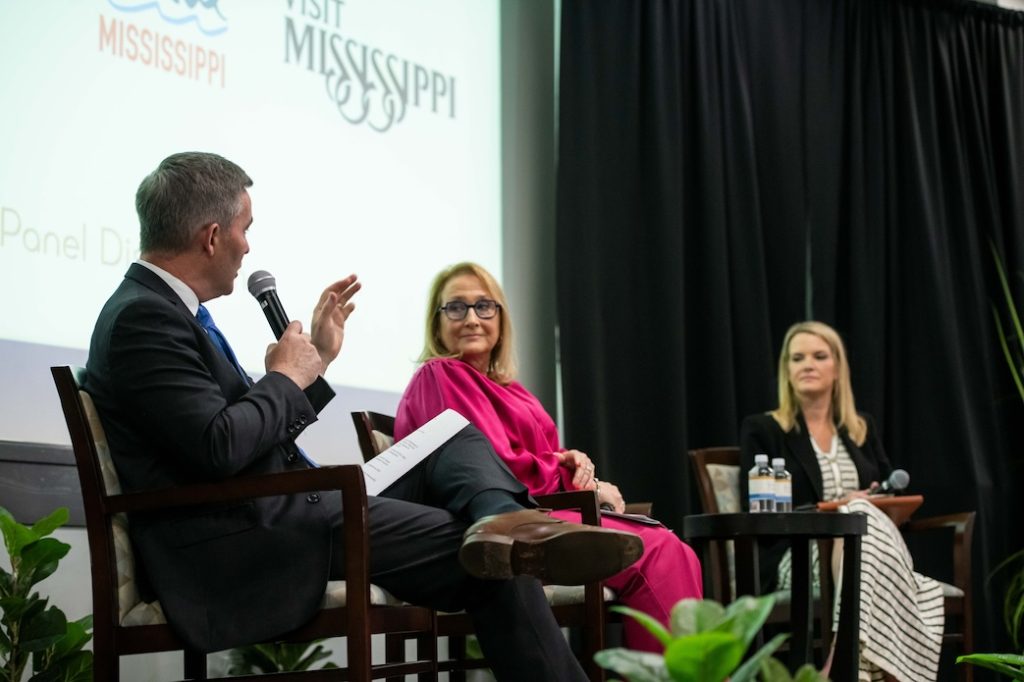
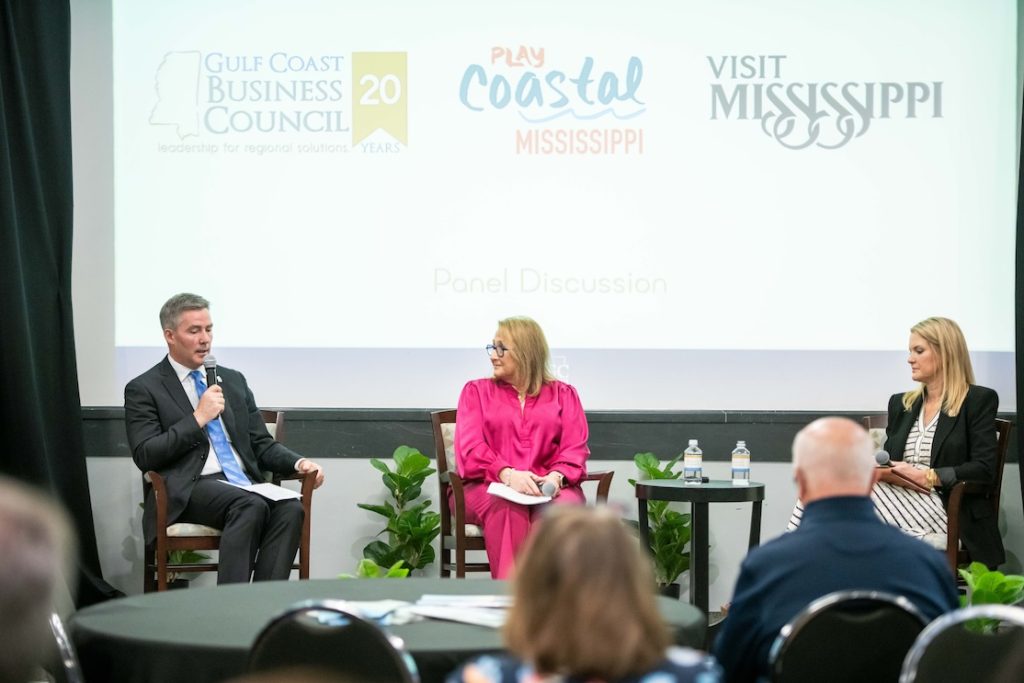
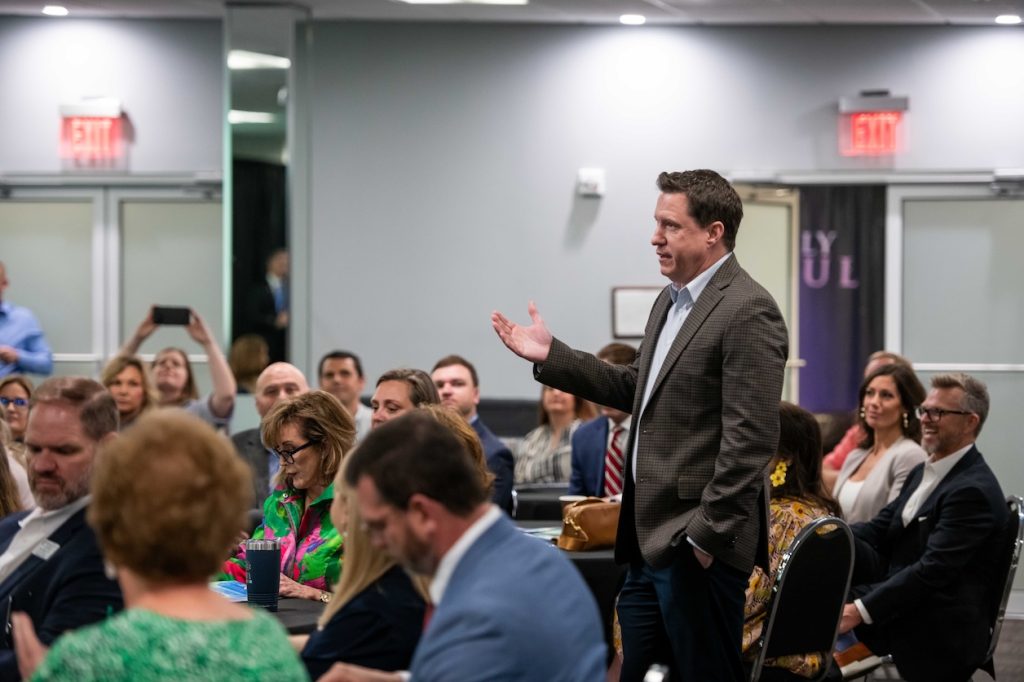
Our March General Membership Meeting brought together business and community leaders at the Knight Nonprofit Center for a timely and impactful conversation on one of Mississippi’s most powerful economic drivers: tourism.
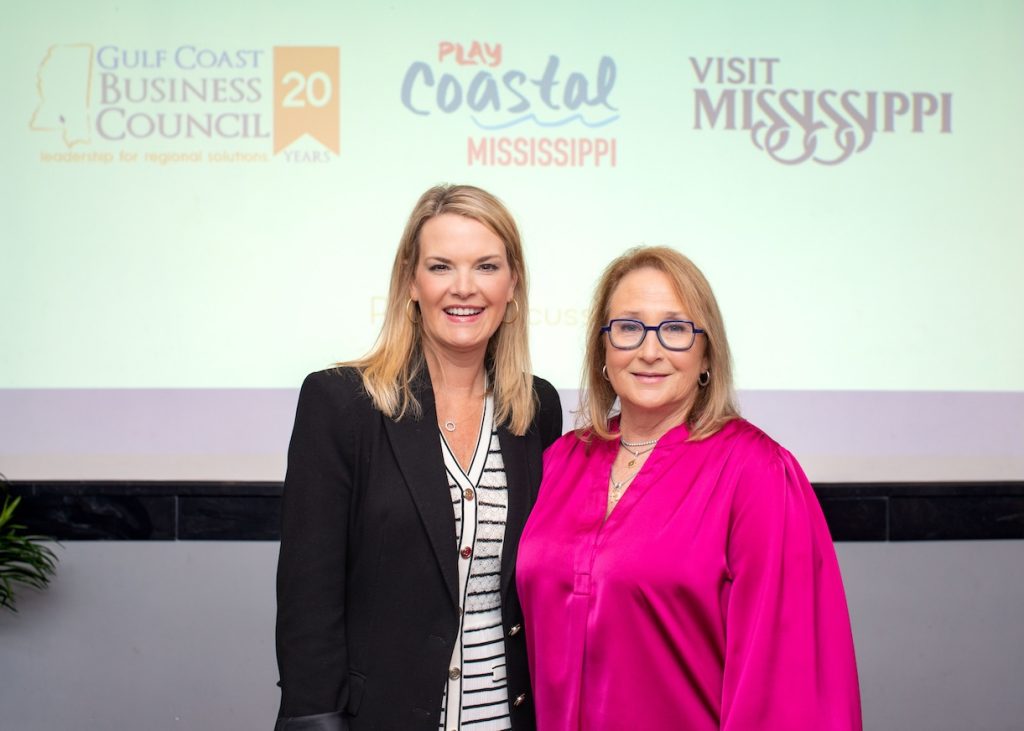
Featured speakers Judy Young, CEO of Coastal Mississippi, and Rochelle Hicks, Director of Tourism at Visit Mississippi, shared insights into the state’s record-breaking tourism growth and the Mississippi Gulf Coast’s role as a leading market within that success.
Tourism as economic development
A central theme of the discussion was clear: tourism is not separate from economic development—it is a critical component of it.
Hicks emphasized that tourism is the fourth-largest industry in Mississippi, with more than 44.2 million visitors generating $18.1 billion in economic impact statewide. These numbers reflect not only strong recovery since the pandemic but sustained growth driven by intentional investment in marketing and promotion.
She highlighted the impact of dedicated tourism funding, which has grown from under $2 million to approximately $16 million annually for advertising and promotion. This investment has enabled Mississippi to compete more effectively with neighboring states and attract new visitors from across the country and around the world.
“Tourism plays a role in every economic development decision,” Hicks noted. “When companies are considering where to locate, they’re also looking at quality of life—what there is to do, where people want to live, and how a place feels.”
The Gulf Coast’s standout performance
Young provided a regional perspective, underscoring the Mississippi Gulf Coast’s significant contribution to the state’s tourism success.
The Coast now welcomes approximately 15.7 million visitors annually, generating more than $2 billion in economic impact. Notably, Coastal Mississippi accounts for roughly one-third of the state’s total tourism revenue and visitation.
Young also highlighted the industry’s strong recovery and expansion, with tourism-related employment growing from 17,000 jobs in 2022 to approximately 30,000 today.
“This is an industry of thousands of front doors,” Young said. “Every interaction, every experience, contributes to the overall impression of our community—and every visit has the potential to become something more.”
She emphasized that tourism not only supports local businesses but also plays a key role in attracting new residents, talent, and investment to the region.
Major events and global exposure
The discussion also spotlighted the Coast’s growing ability to attract large-scale events that bring significant economic impact and national visibility.
One example is the Clash Endurance Olympic qualifying triathlon taking place this week, which is expected to draw more than 3,000 athletes and thousands of additional visitors. With international competitors and global attention, events like this position the Gulf Coast as a competitive destination for sports tourism.
Leaders noted that these opportunities do not happen by chance—they are the result of coordinated efforts between state agencies, regional organizations, local governments, and community partners.
Each event brings new dollars into the local economy through hotel stays, dining, retail, and entertainment, while also serving as a powerful marketing tool for the region.
Marketing Mississippi to the world
Hicks also shared how Visit Mississippi is expanding the state’s reach through targeted campaigns focused on key strengths, including music, culture, and culinary experiences.
Recent initiatives include partnerships with the Michelin Guide, increased promotion of Mississippi Gulf seafood, and the “Mississippi on the Map” podcast, which highlights the state’s global cultural influence.
These efforts are designed to attract new audiences while reinforcing Mississippi’s identity as a destination rich in history, creativity, and hospitality.
Looking ahead, Mississippi will also play a role in the nation’s 250th anniversary celebration, with events and initiatives planned to showcase the state’s contributions to American history and culture.
A call to collaboration
Throughout the meeting, GCBC President and CEO Jamie Miller reinforced the importance of viewing tourism, industrial development, and quality of life as interconnected components of a broader economic strategy.
He encouraged attendees to recognize that economic development extends beyond traditional industry recruitment and includes the experiences, assets, and community strengths that make people want to visit—and stay.
“The Business Council exists to help move the needle,” Miller said. “And that means understanding that we are all economic developers.”
As Coastal Mississippi continues to grow and gain recognition on a national and global scale, collaboration across sectors will remain essential to sustaining that momentum.
GCBC extends its appreciation to Judy Young and Rochelle Hicks for their leadership and insights, as well as to all members and partners who joined the conversation.
Together, we are building a stronger, more connected, and more competitive Gulf Coast.
