
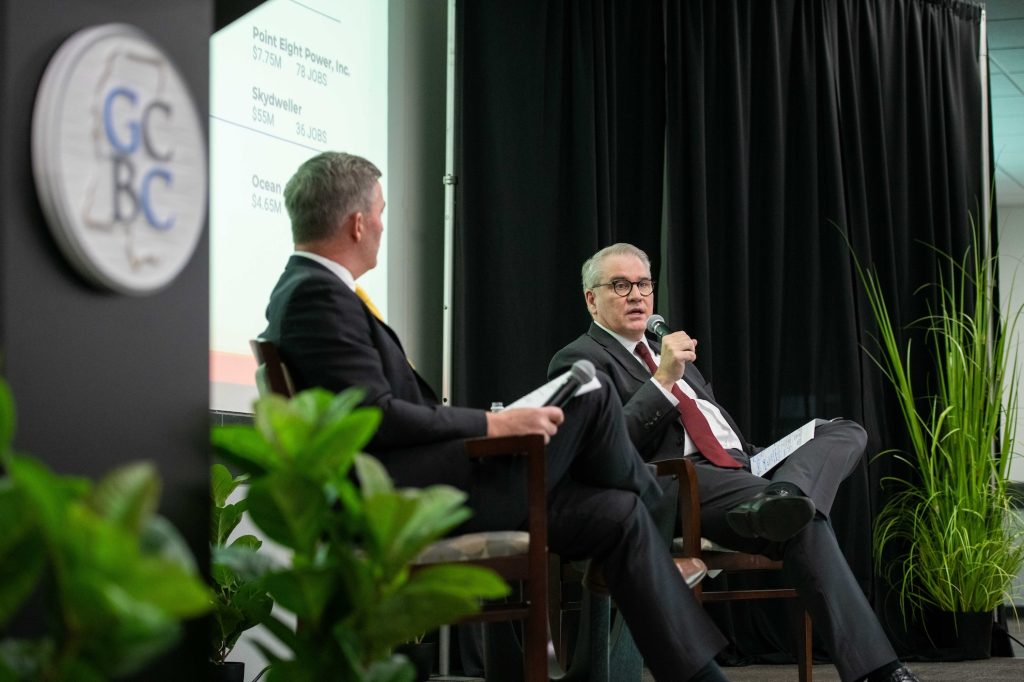
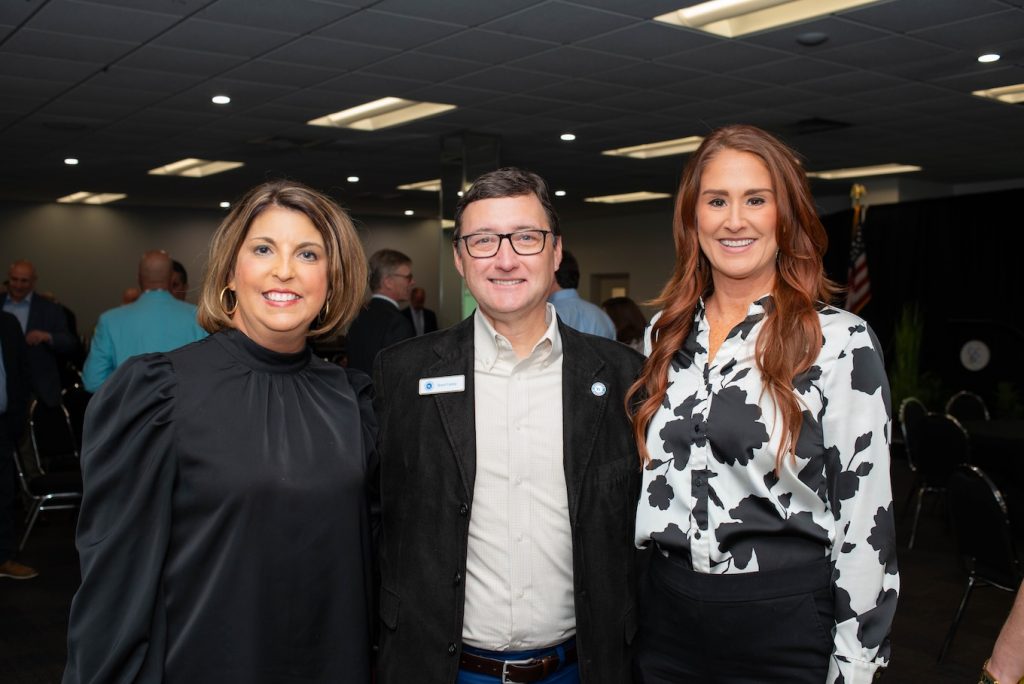
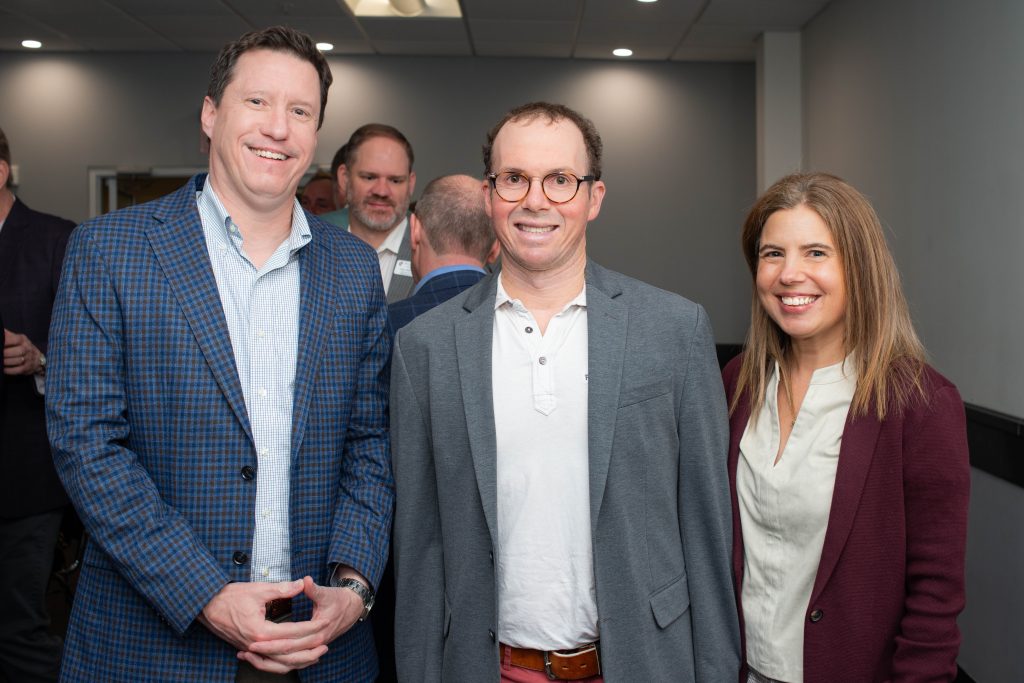
On Thursday, February 26, GCBC members gathered at the Knight Nonprofit Center (Regions Room) for networking, breakfast, and a focused conversation on the opportunities and constraints shaping economic growth in Coastal Mississippi.
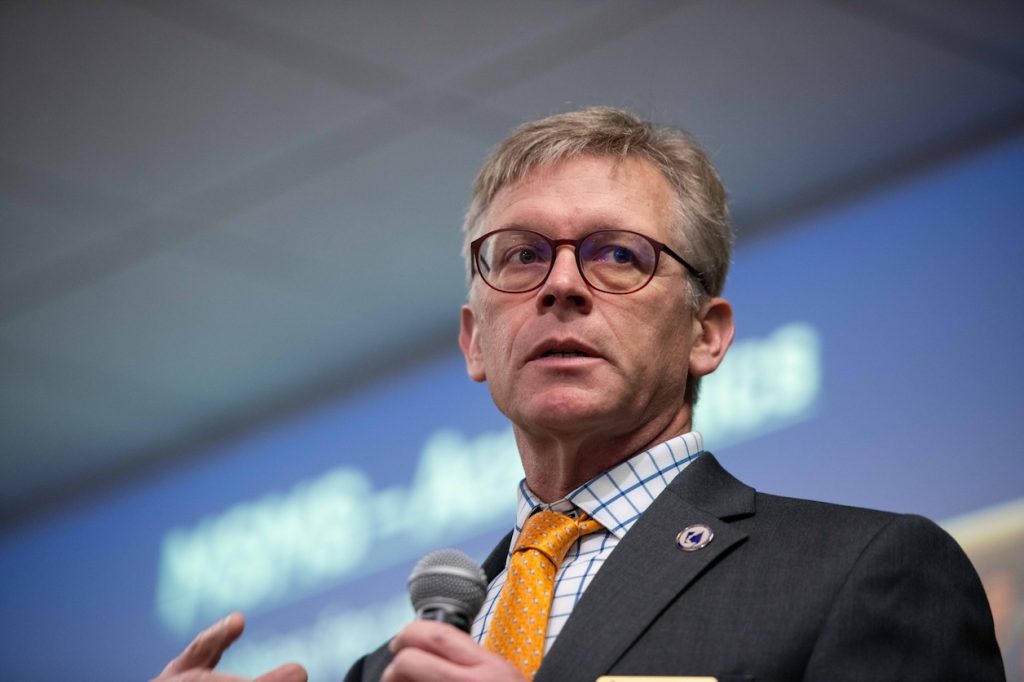
The meeting featured Bill Cork, Executive Director of the Mississippi Development Authority (MDA), who shared a statewide economic development scorecard, a look at the Coast’s recent wins, and candid perspective on what he believes is limiting the region’s ability to convert more prospects into projects. The program also included a sponsor spotlight from ESCFederal, a legislative update, an MSMS presentation, and reminders about GCBC leadership programming and upcoming signature events.
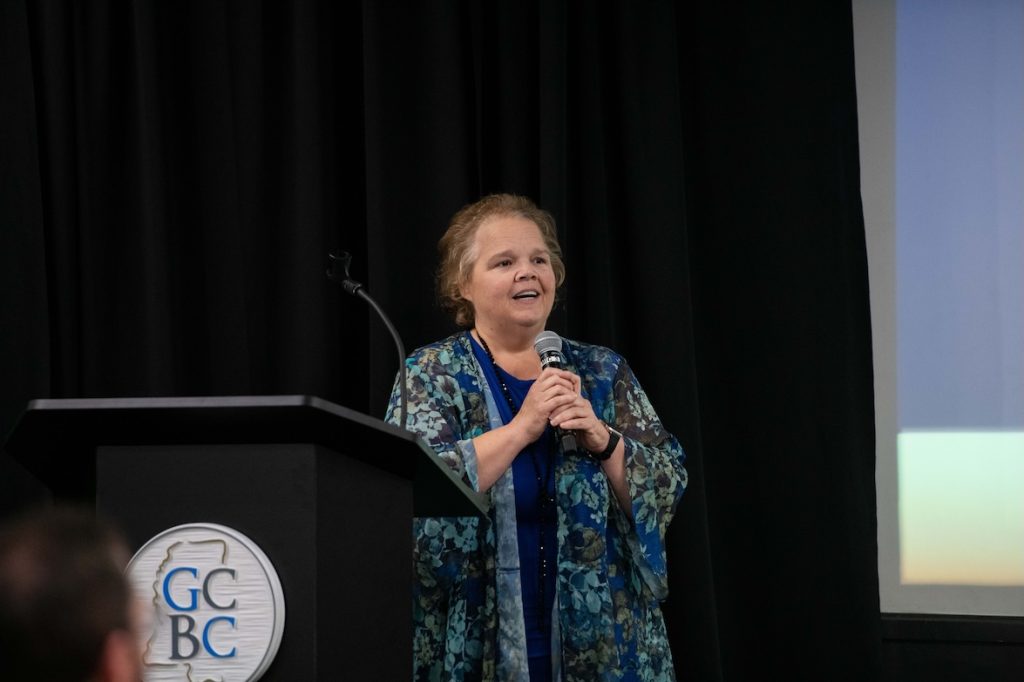
Meeting sponsor spotlight: ESCFederal
Thank you to ESCFederal for sponsoring the February meeting. ESCFederal shared an overview of the company’s footprint and approach:
- Family-owned facilities management company with 63 years in operation
- Operations in 44 states, serving 400 clients with 7,000 employees
- No private equity and no debt
- Offerings include single-service, multi-service, and full facilities management solutions tailored to client needs
- Industry experience spans hospitality and entertainment, luxury retail, manufacturing, distribution, education, healthcare, health and fitness, airports, and corporate and commercial campuses
- Operational priorities include competitive wages and benefits, employee engagement, training and development, risk management, quarterly business reviews, strategic partners, and scalable service delivery
- 96% retention rate and year-over-year growth
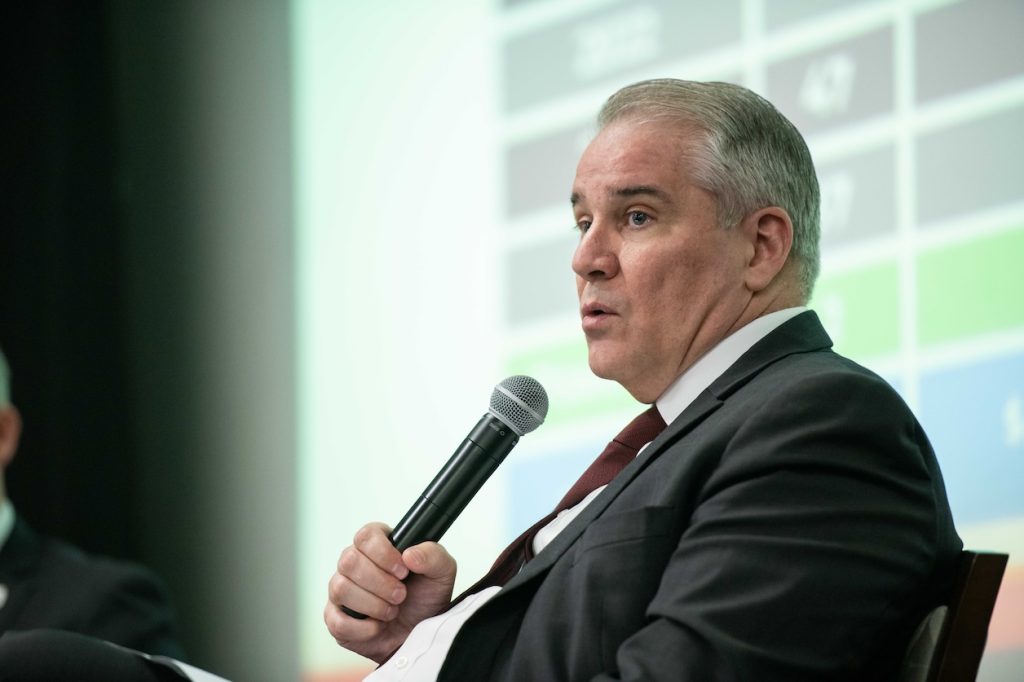
Statewide scorecard: investment, jobs, and project breadth
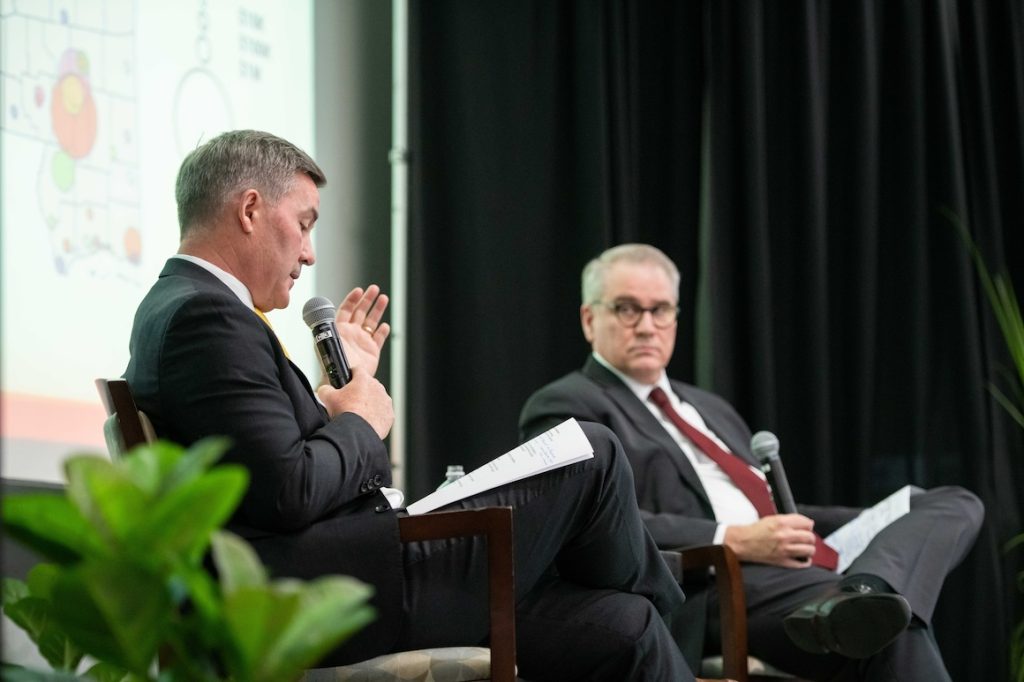
Bill Cork opened with a statewide “scorecard” covering the last several years of Mississippi’s economic development results. He cited approximately $66 billion in capital investment and 24,000 jobs during that period, noting that removing data center projects still reflects substantial activity: roughly $27 billion in capital investment and about 23,000 jobs.
He also emphasized geographic breadth. According to Cork, nearly 60 of Mississippi’s 82 counties have seen a “win” tied to the state’s economic development activity during that period, with visible concentration in North Mississippi, the I-20 corridor, the Coast, and Northeast Mississippi.
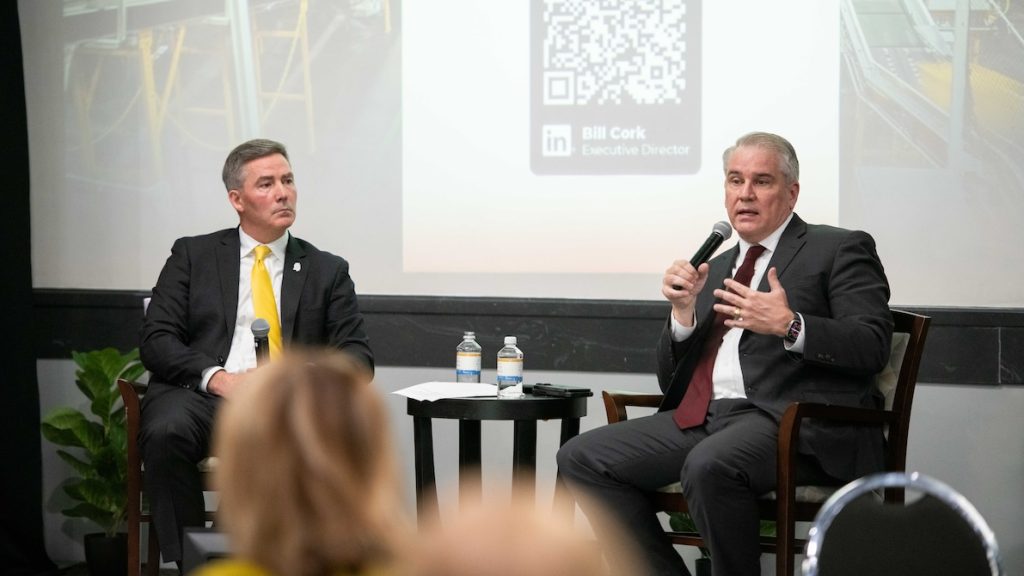
Lower three coastal counties: recent wins, pipeline volume, and win rates
Cork then drilled down into projects announced on the Coast since 2020 and used that list to frame a larger point: the Coast is seeing significant deal flow, but converting more opportunities into wins depends heavily on “product” — site and industrial readiness that can support speed-to-market.
He reviewed announcements by county and also shared pipeline figures (projects considered and pursued):
Jackson County (examples cited in the meeting)
- ST Engineering Halter Marine and Offshore (and related shipbuilding continuity)
- Oleo-X
- BWC Terminals
- Superior Optical Labs (noted as represented in the room)
Cork said Jackson County had looked at 55 projects in the pipeline, with approximately $378.5 million in investment and 388 net new jobs associated with the cited wins.
Hancock County (examples cited in the meeting)
- Relativity Space
- Rocket Lab (noted as represented in the room)
- Skydweller
- Calgon Carbon expansion
- Point Eight Power
Cork cited 73 projects in the pipeline and referenced about $547 million in capital investment across six projects with 834 jobs.
Harrison County (examples cited in the meeting)
- PCC GulfChem (described as the largest driver of economic value among Coast announcements)
- Gulf Ship
- Other expansions and wins cited on the slide
Cork cited 44 projects in the pipeline and referenced 728 jobs and $606 million in capital investment, noting that a portion of Harrison wins were expansions and that PCC represented a major share of economic value.
The “product” problem: site readiness and speed to market
A key theme in Cork’s remarks was that the Coast is seeing opportunities but often lacks enough ready industrial capacity to move quickly when prospects are evaluating locations.
He described “product” as industrial capacity that can support a near-term decision — “ready to put a shovel on the ground” in months rather than years. Discussion connected this to the complexity of permitting, multi-source funding timelines, and the reality that strategic sites can take years to assemble and prepare.
The conversation included examples from local development efforts where projects take extended timelines because funding arrives in small increments, requiring phased work over many years rather than enabling a faster, fully-funded build.
Energy capacity: “energy revolution” framing and what it means for competitiveness
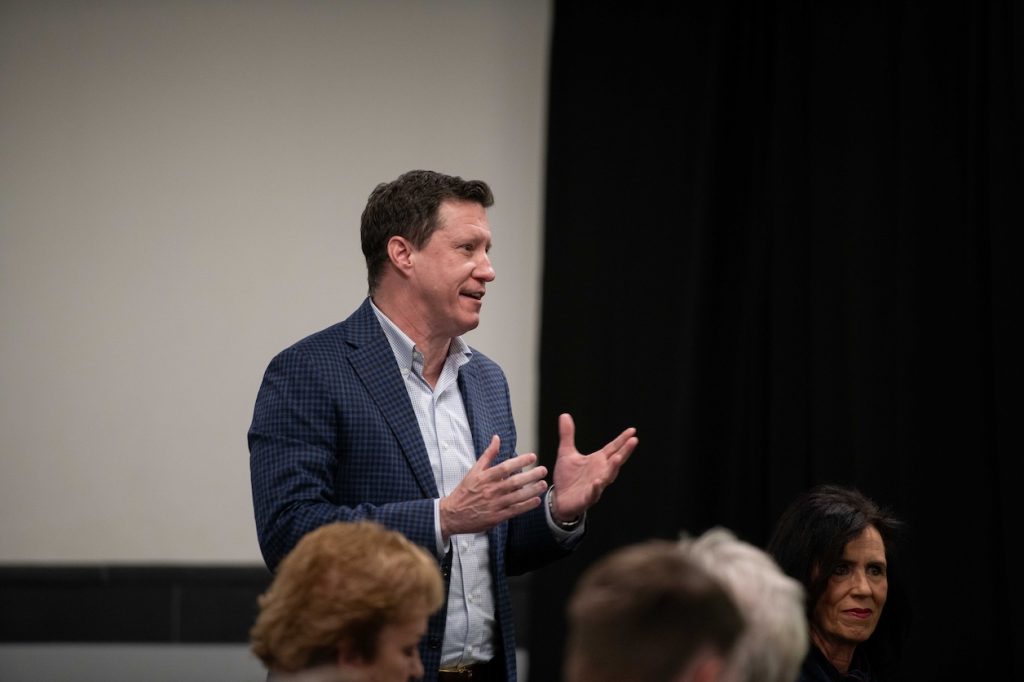
Cork also addressed energy capacity as a defining constraint for the next generation of projects — including, but not limited to, data centers.
He argued that GDP growth and energy production/consumption are closely linked and that an increasingly automated and electrified economy depends on access to “electrons.” He described Mississippi Power Play, an energy roundtable convened by the governor in 2025, as a “full court press” approach spanning generation, transmission, procurement timelines, and reducing regulatory friction to move faster.
He discussed the concept of creating a “war chest” to pay slotting fees for long-lead generation equipment so Mississippi can secure earlier positions in the procurement queue. In his framing, the state’s goal is to shorten timelines so that new generation can come online sooner than typical multi-year waits, improving Mississippi’s ability to compete when large-load users evaluate sites.
Tourism projects and the rebate program
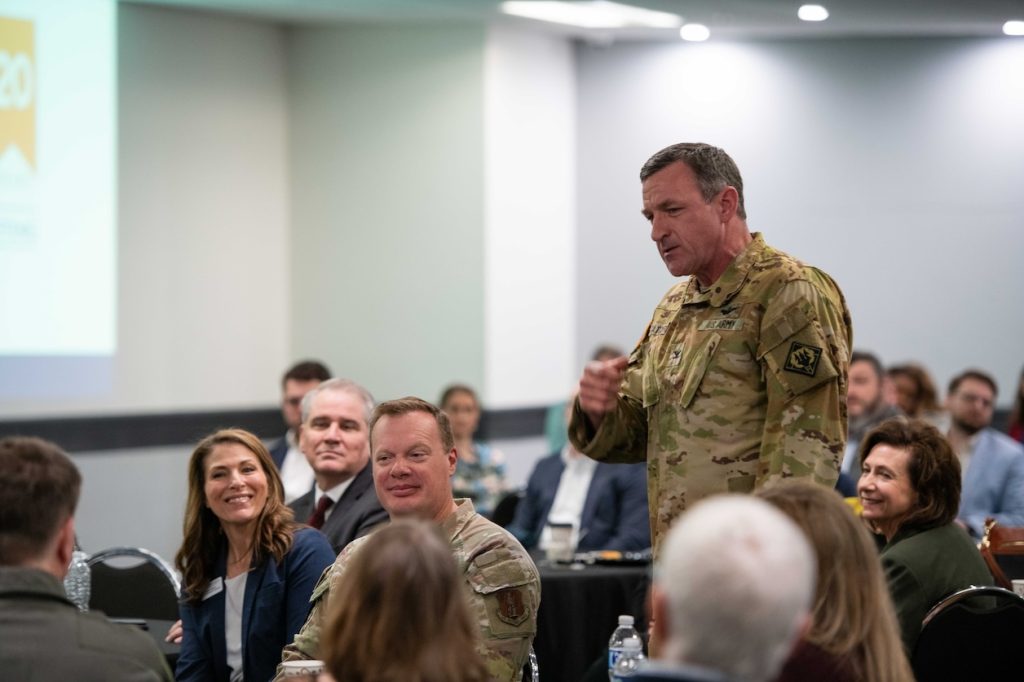
Although March’s General Membership Meeting will focus more directly on tourism, Cork briefly referenced tourism development tools used on the Coast, describing how the state’s rebate program supports large destination projects by rebating a portion of eligible tax revenues back to help with financing.
He noted the Coast’s significant use of the program statewide and referenced the Gulfport Town Center as a recent approval.
Gulf Coast Restoration Fund letter: coordination, prioritization, and debate
A substantial portion of the meeting centered on the Gulf Coast Restoration Fund (GCRF) and Cork’s annual letter to legislative leadership, which drew public attention.
GCBC leadership provided context on the GCRF process: applications submitted through the portal, advisory review and recommendations, and MDA’s statutory obligation to make legislative recommendations.
Cork emphasized that the letter itself does not carry the force of law — appropriations are made by the legislature and enacted through the governor’s signature — and described MDA’s role as executing the process, providing transparency on applications and scoring, and offering recommendations.
Key points discussed in the meeting included:
- The argument that long-term alignment and regional coordination are needed to increase the Coast’s ability to win large-scale opportunities
- The idea of requiring and funding a Coast-wide strategy (often described as a “plan of plans”)
- Concerns about a “short-funding” pattern where partial awards can leave projects stalled, delayed, or unable to close funding gaps as costs rise over time
- The challenge of balancing community development priorities with industrial and job-creation projects that expand the tax base
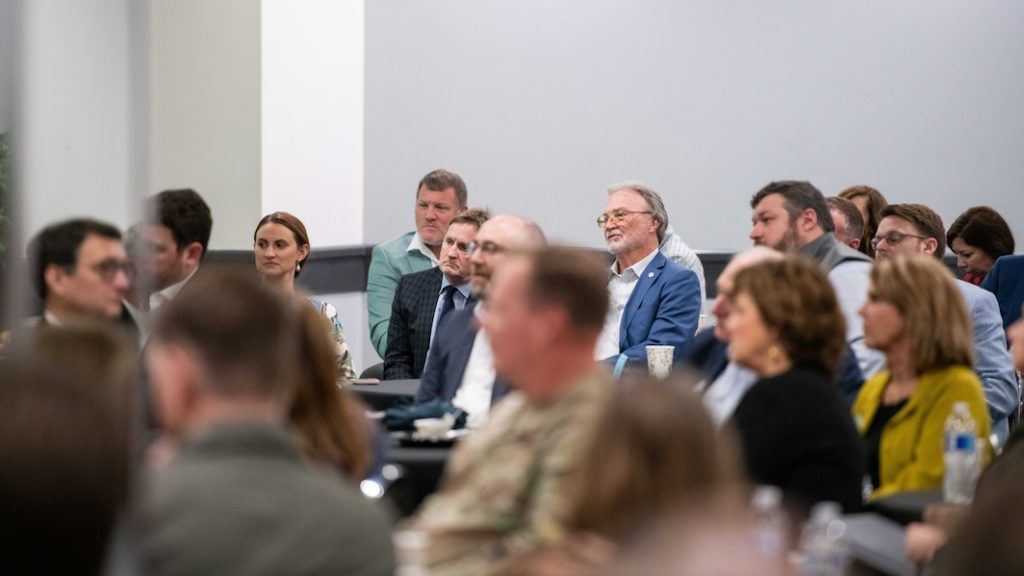
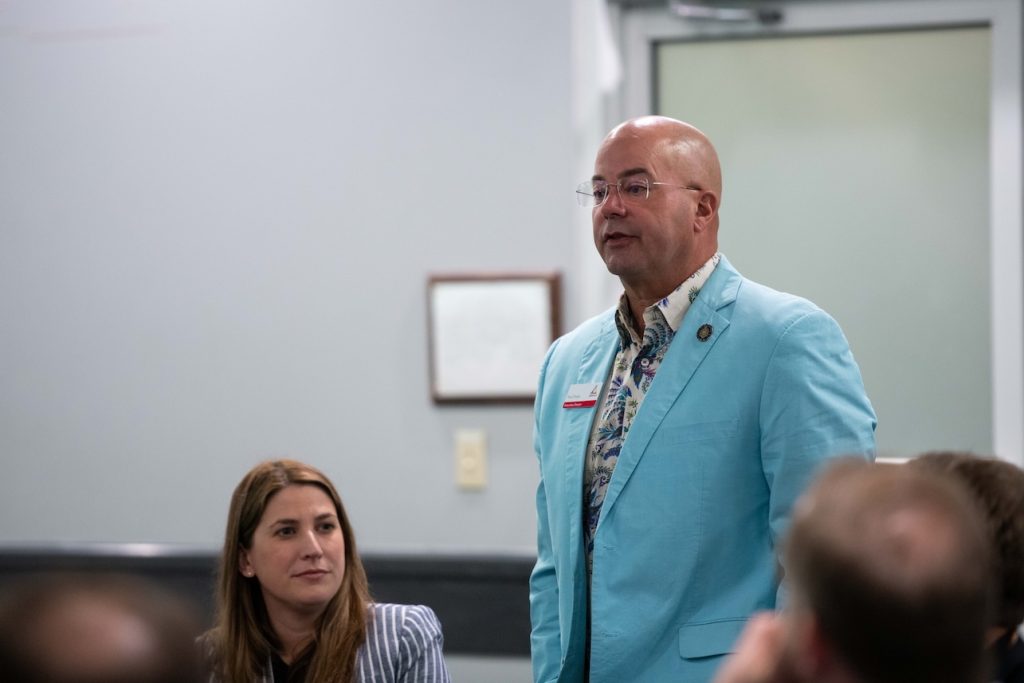
A notable portion of the meeting was Q&A and discussion from local and regional leaders, reflecting differing views on messaging, process, and the practical constraints on the ground. Cork reiterated his position that the region is seeing opportunities but is not converting enough of them — pointing to product readiness, regional coordination, and speed-to-market as recurring issues — while also acknowledging the workload borne by local teams in responding to RFIs and managing complex project realities.
Legislative update: From the Capitol to the Coast
Members also received a legislative update focused on current issues moving through the Capitol and their implications for Coastal Mississippi’s business and industry community.
MSMS presentation: talent, scholarships, and expansion goals
The program included a presentation on the Mississippi School for Mathematics and Science (MSMS), created by the Mississippi Legislature in 1987 as a public, residential high school for academically talented students.
MSMS highlighted:
- Four core values: community, creativity, scholarship, and service
- 15 National Merit Semi-Finalists in the current senior class
- Historically, roughly 60% of MSMS graduates attend Mississippi universities
- The most recent graduating class of 114 students earned over $11 million in scholarships accepted
- MSMS also shared goals to expand its mission by admitting 10th grade students, grow outreach through Summer STEM camps for students and teachers, enhance research and mentoring programs statewide, and continue strengthening student support through MSFF funding.
Masters Leadership Program
GCBC shared that the 2026 Masters Leadership Class is officially underway. The cohort is exploring a central question: can the Mississippi Gulf Coast strengthen its economy by adopting a regional “Plan of Plans”? Participants are studying planning models used by cities and counties and using AI tools (including ChatGPT) to support research and collaboration. Over nine months, the class will engage stakeholders, benchmark model regions, develop policy recommendations, and produce a final white paper.
Executive Leadership Academy
Registration for the 2026 GCBC Executive Leadership Academy, offered in partnership with The University of Southern Mississippi, closes February 28.
This year’s nine-month, in-person cohort focuses on executive-level AI governance and strategy, equipping senior leaders to guide responsible, AI-enabled transformation within their organizations.
Save the date: State of the Coast Symposium
Members were also asked to save the date for the State of the Coast Symposium on Thursday, May 21, from 8:00–10:00 a.m.
Closing note
The February meeting combined a statewide economic development snapshot with a direct conversation about what it will take for the Coast to compete for — and close — more of the large, high-impact opportunities in today’s market. Thank you to everyone who attended, asked questions, and contributed to a productive discussion.
