
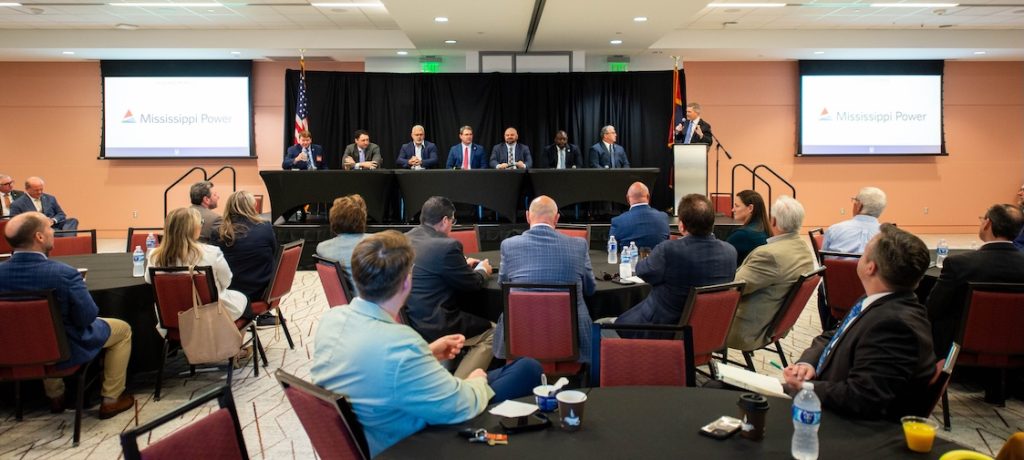
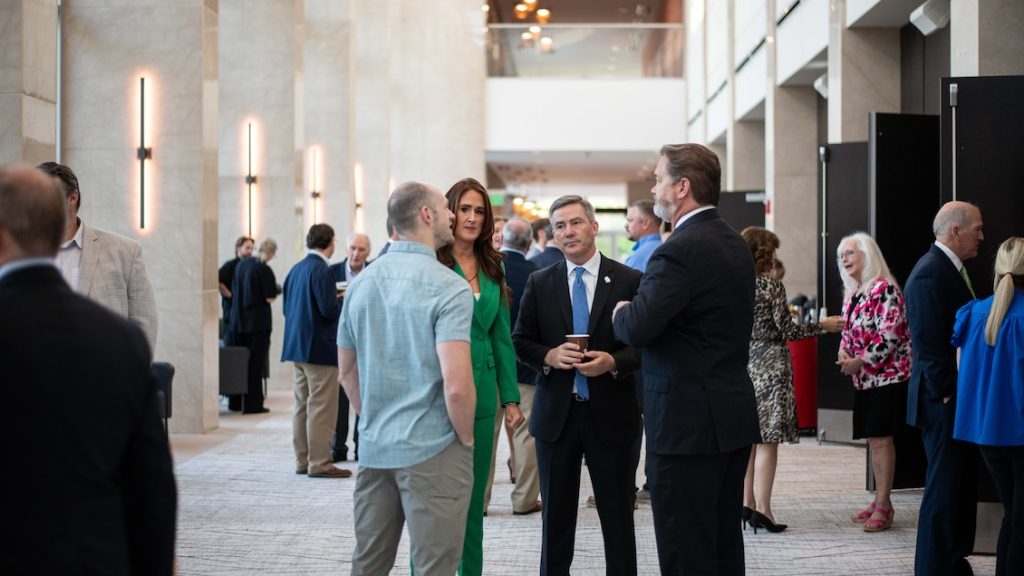
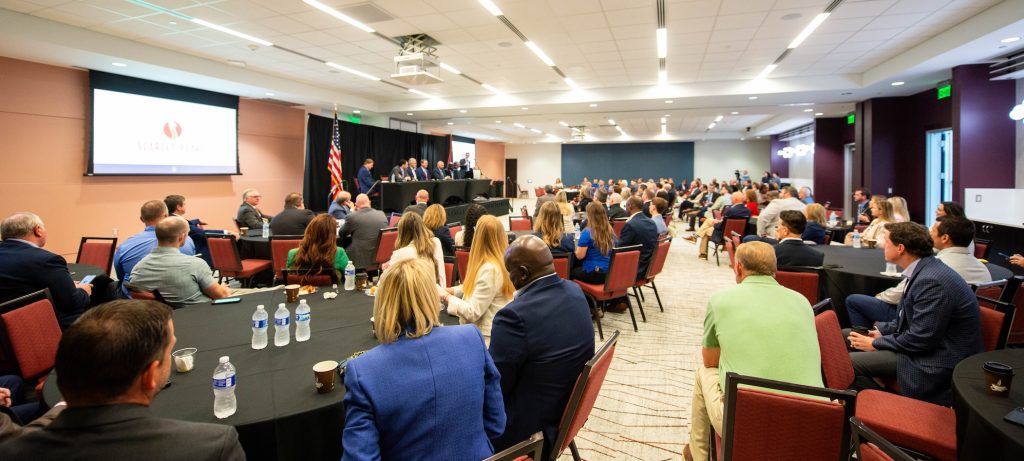
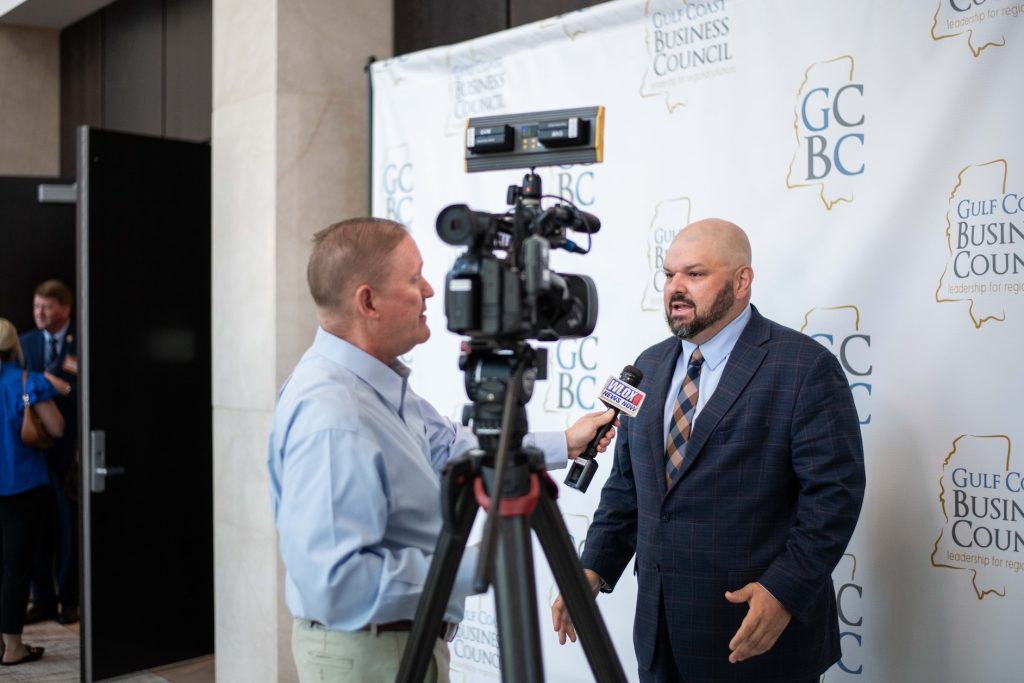
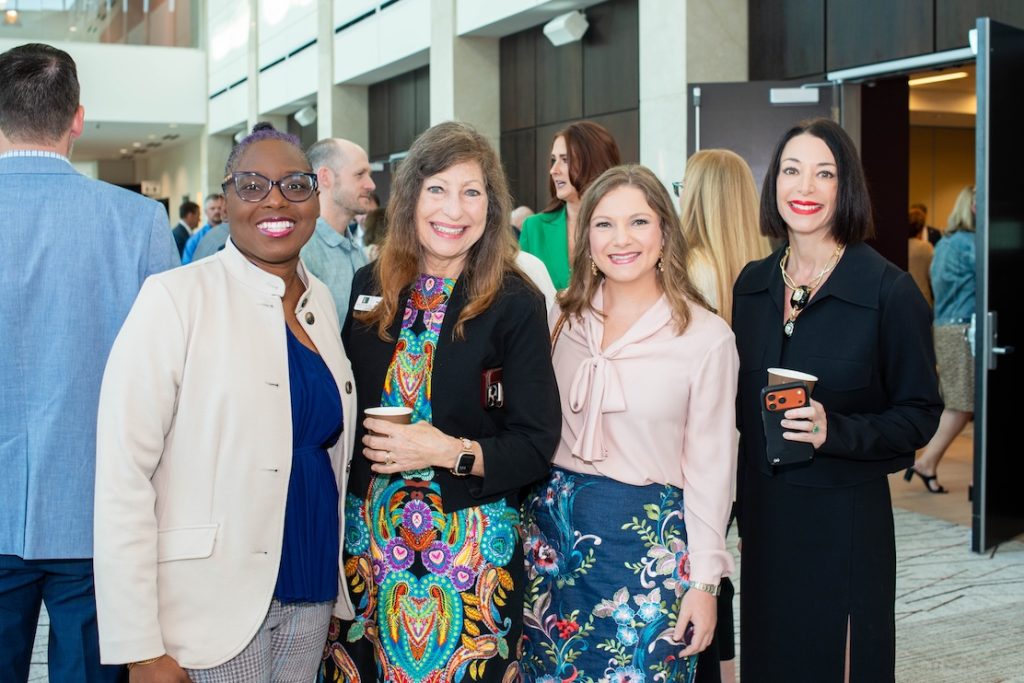
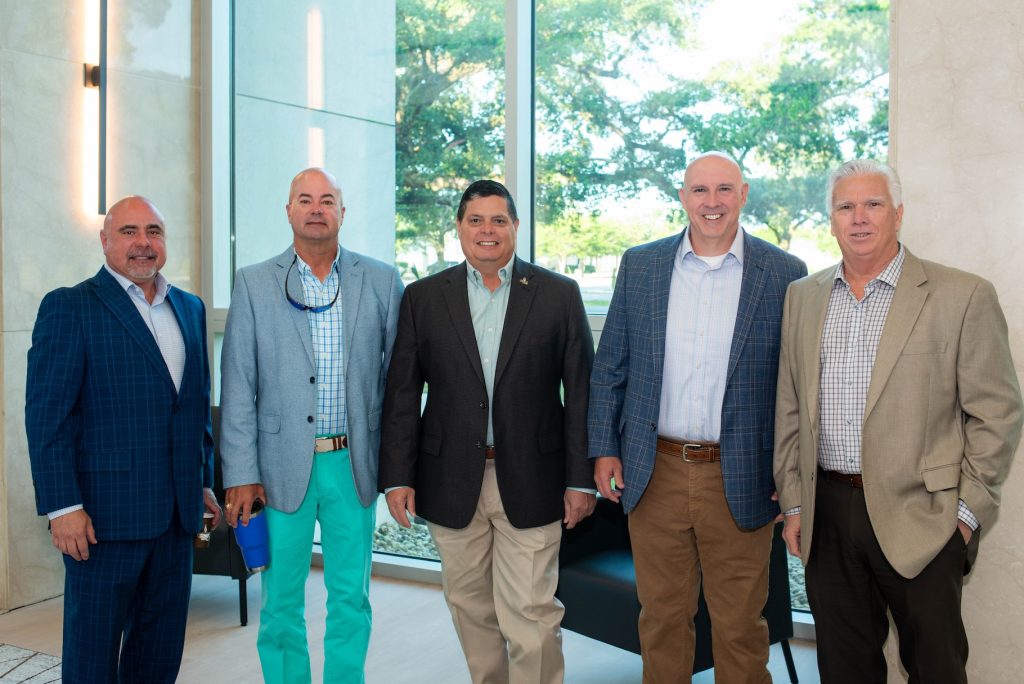
On Thursday, April 23, the Gulf Coast Business Council welcomed members, elected officials, and regional leaders to the Hospitality & Resort Management Center at MGCCC’s Biloxi Campus for a special April General Membership Meeting.
This breakfast reception served as a timely legislative recap following the conclusion of the 2026 Mississippi Legislative Session—bringing the Coast delegation face-to-face with the business community to reflect on outcomes, discuss priorities, and chart a path forward.
With strong attendance and active dialogue, one message came through clearly: the Gulf Coast is positioned for continued growth—but alignment and strategic focus will determine how far and how fast we go.
A Strong Legislative Session with Meaningful Wins
The 2026 session delivered several key wins for the Mississippi Gulf Coast, reinforcing the region’s importance as an economic engine for the state.
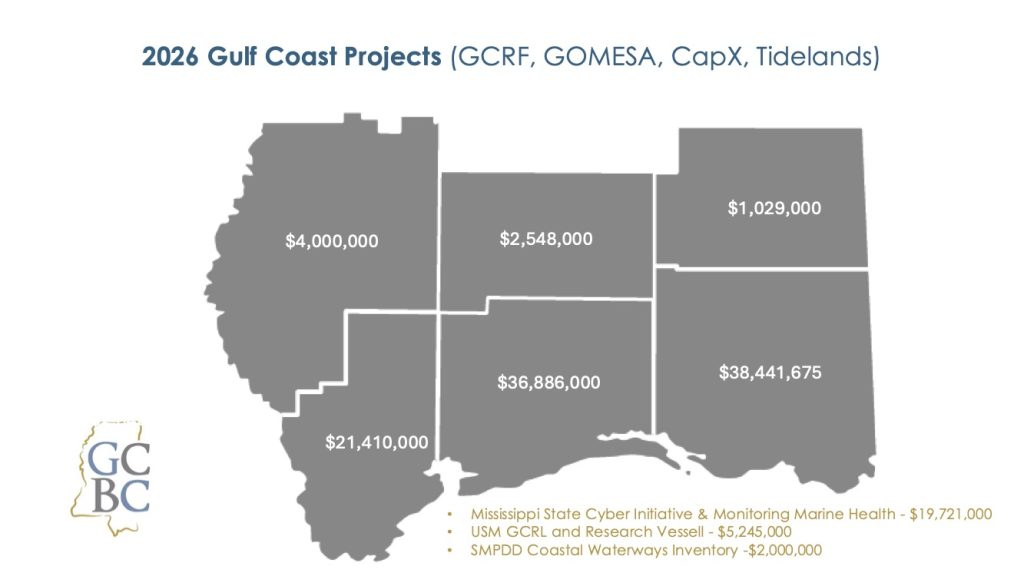
At a high level, lawmakers finalized a $7.4 billion general fund budget and approved approximately $130 million for Gulf Coast projects through multiple appropriation bills, including the SB 3071 – Gulf Coast Restoration Fund (GCRF), HB 1896 – the Gulf of Mexico Energy Security Act (GOMESA), Tidelands Trust Fund, and SB2189 – Capital Expense Fund. This translated into continued investment in infrastructure, economic development, and resilience for Coastal Mississippi.
Among the most impactful outcomes discussed:
Continued Investment in Coastal Projects
Legislators emphasized the importance of restoring funding streams that had stalled in the previous year. Programs tied to Gulf Coast Restoration Funds, Tidelands, and GOMESA are once again moving forward—supporting infrastructure, port improvements, and community development across Hancock, Harrison, and Jackson counties.
Insurance Relief Through Home Mitigation
One of the most widely supported pieces of legislation was Senate Bill 2409, establishing a statewide home mitigation program. This initiative incentivizes windstorm-resistant upgrades, with the goal of lowering insurance costs and improving long-term resilience for homeowners along the Coast.
Workforce and Education Advancements
The session included meaningful steps to strengthen Mississippi’s workforce pipeline:
- A teacher pay raise, with plans for continued increases in future sessions
- Creation of a state-based Office of Apprenticeship
- New efforts around financial literacy and civics education in schools
Together, these investments aim to build a more competitive workforce while supporting long-term economic growth.
Major Economic Development Projects
Lawmakers highlighted several transformational investments, including:
- Final funding for the Mississippi Cyber Center, expected to create high paying jobs technology jobs and strengthen collaboration between Keesler Air Force Base, the state, and the private sector
- Continued support for port, infrastructure, and industrial development projects across the region
These efforts reinforce the Coast’s role in national security, advanced industries, and innovation.
What Didn’t Get Across the Finish Line
While the session delivered strong results overall, several high-priority initiatives remain unresolved.
PBM Reform Falls Short
House Bill 1665, addressing Pharmacy Benefit Manager reform, ultimately failed after evolving into a broader cost debate. This issue remains important for both businesses and independent pharmacies and is expected to return in future sessions.
Gulf Coast Restoration Revolving Loan Fund
One of the most discussed topics of the morning was the failure to enact the Gulf Coast Restoration Revolving Loan Fund.
The legislation passed both chambers but was vetoed by the Governor. While the House voted to override the veto, the effort stalled in the Senate due to broader political dynamics tied to other veto override negotiations.
Despite the setback, there is strong consensus among Coast legislators that this initiative remains a priority. The loan fund is seen as a critical tool to extend the lifespan of restoration dollars and create sustainable, long-term investment capacity for the region.
Inside the Process: Politics, Priorities, and Progress
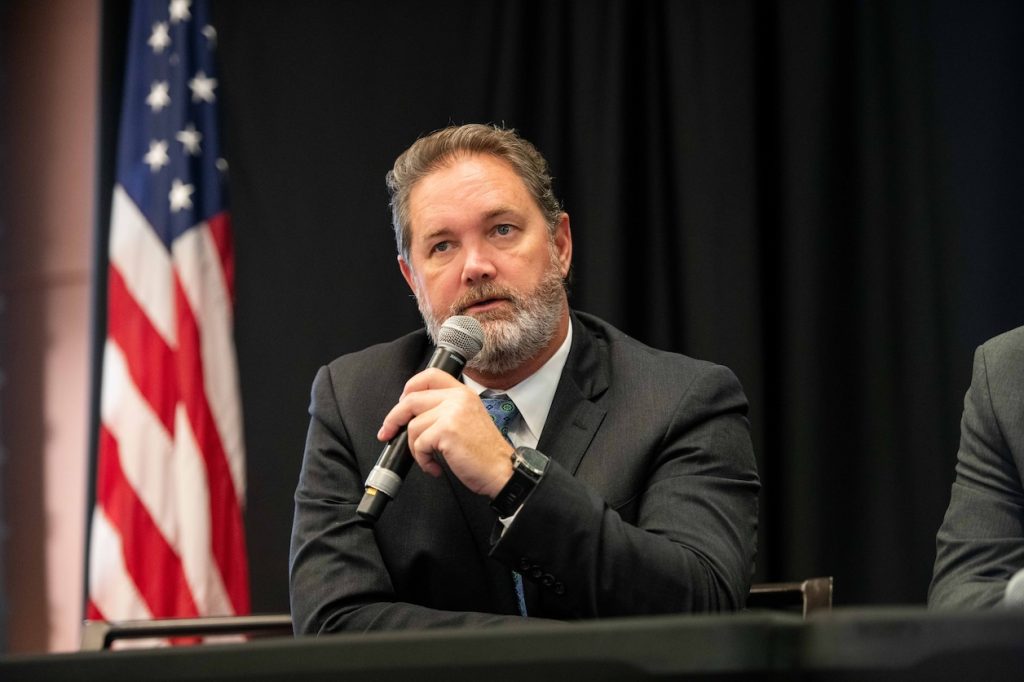
One of the most valuable aspects of the meeting was the candid discussion around how the legislative process actually works.
Leaders from both the House and Senate emphasized:
- The importance of collaboration across chambers
- The realities of negotiating with statewide leadership and competing priorities
- The complexity of balancing regional needs with state-level politics
As one legislator explained, not every bill fails because of lack of support—sometimes broader political dynamics determine the outcome.
At the same time, there was a shared sentiment that the Coast delegation is uniquely unified compared to other regions—and that unity is one of its greatest strengths.
The Biggest Theme: One Coast, One Strategy
If there was a single takeaway from the morning, it was this:
The Gulf Coast’s future depends on its ability to operate as one unified region.
Legislators repeatedly emphasized that while the Coast works together effectively in Jackson, fragmentation at the local level can limit impact.
Key challenges identified:
- Competing local priorities across cities and counties
- Lack of a clearly defined, shared regional agenda
- Missed opportunities to present a unified front to the state
At the same time, leaders made it clear: When the Coast aligns, it has the power to lead the state.
A Call to Action for the Business Community
The discussion naturally turned toward solutions—and the role the business community must play.
There was strong support for identifying a small number of clear, shared priorities for the region—rather than pursuing dozens of competing initiatives.
As several legislators noted, if the Coast can align around just a few major priorities, the delegation is well-positioned to deliver results.
This aligns directly with GCBC’s ongoing work through this year’s Masters Leadership Class to define a regional “plan of plans”—bringing together cities, counties, and industry leaders to identify the most important investments for the future.
Looking Ahead: A Critical Window for the Coast
With only one legislative session remaining before the 2027 election cycle, the next year represents a pivotal opportunity.
Key issues expected to remain at the forefront:
- Insurance affordability
- Infrastructure investment
- Municipal funding and revenue challenges
- Economic competitiveness and job growth
There is also growing recognition that the Coast must continue telling its story—highlighting its economic impact, innovation, and contributions to the state.
Final Thoughts
The April General Membership Meeting was more than a legislative recap—it was a reality check and a rallying point.
The 2026 legislative session delivered meaningful progress, but the path forward is clear: alignment, prioritization, and collaboration will determine what comes next.
The Gulf Coast has proven its resilience. Now, the question is whether it can fully realize its competitiveness.
