
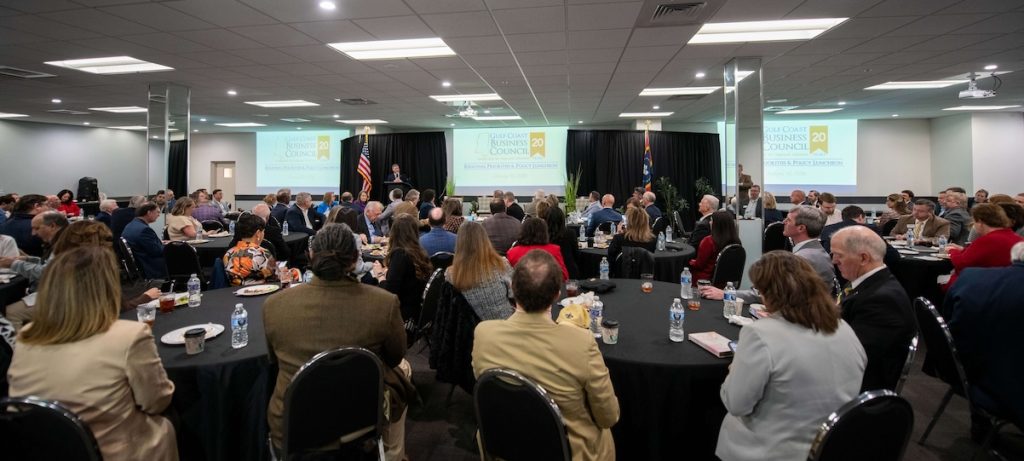
On Friday, January 30, Gulf Coast Business Council members gathered for a sold-out Regional Priorities & Policy Luncheon at the Knight Nonprofit Center. With doors opening early for networking, the packed room reflected something we’re proud of: Coastal Mississippi’s business and civic leaders are hungry for real conversations about shared priorities—and ready to lead.
GCBC President and CEO Jamie Miller opened the meeting by marking an important milestone: GCBC is celebrating 20 years of service as the unified voice for business and industry in Coastal Mississippi—established in the wake of Katrina, and still focused on leadership for regional solutions.
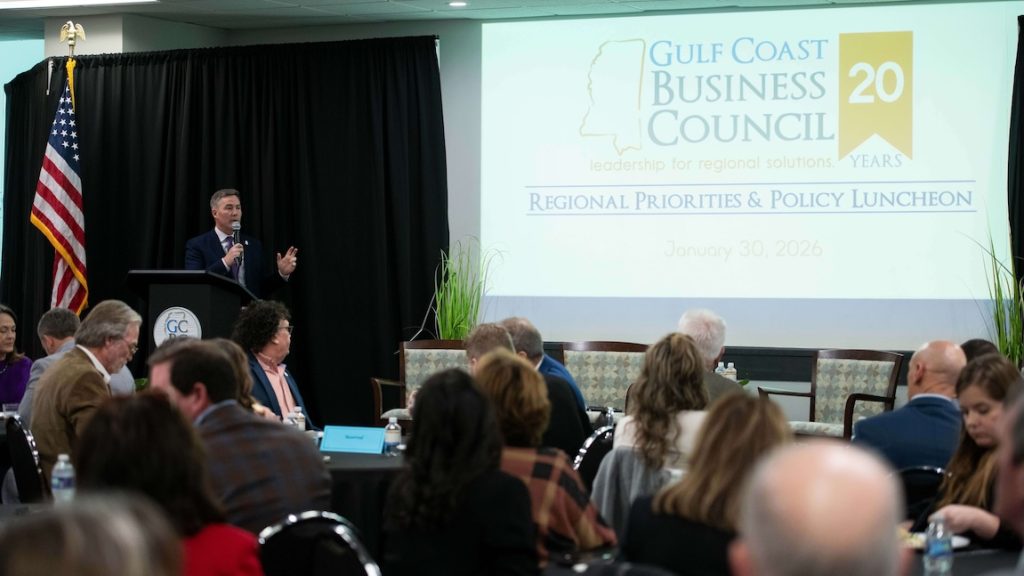
A Message That Set The Tone: Alignment Needs Leadership
A central theme of the luncheon was simple and direct: alignment matters—but alignment without leadership doesn’t move anything forward.
Miller acknowledged that regional alignment does not require agreement on every issue. It does require committing to lead on the issues where we do agree.
As we begin 2026, the call to action was clear: rededicate ourselves to working together to grow the economy and improve quality of life across Coastal Mississippi.
Regional Planning, Powered By AI: The 2026 Masters Leadership Program
One of the most forward-looking moments of the program was Miller’s reflection on a major regional planning effort from the past: the Plan for Opportunity (December 2013), a comprehensive intergovernmental strategy intended to align priorities across economic growth, workforce, housing, transportation, and resilience.
That reflection served as the bridge to what comes next.
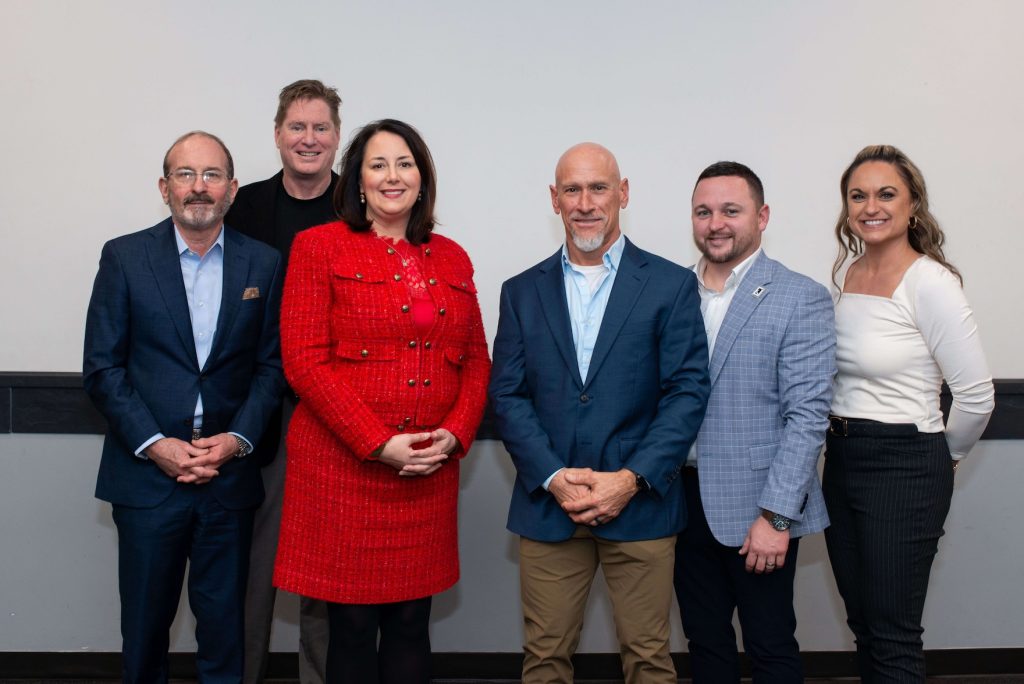
The 2026 Masters Leadership Program will take on an ambitious task: crafting an AI-powered regional plan grounded in the plans that cities, counties, and regional organizations have already adopted. The goal is not to create “one more plan,” but to use new tools to consolidate what already exists, identify shared priorities, and build a clearer benchmark for regional progress.
GCBC is partnering with the Mississippi Artificial Intelligence Network, with support from Colin Napier, to guide the technical approach and help ensure the work is credible, useful, and actionable.
Learn more and apply for the 2026 Masters Leadership Program here.
Executive Leadership Academy: Governing And Leading With AI
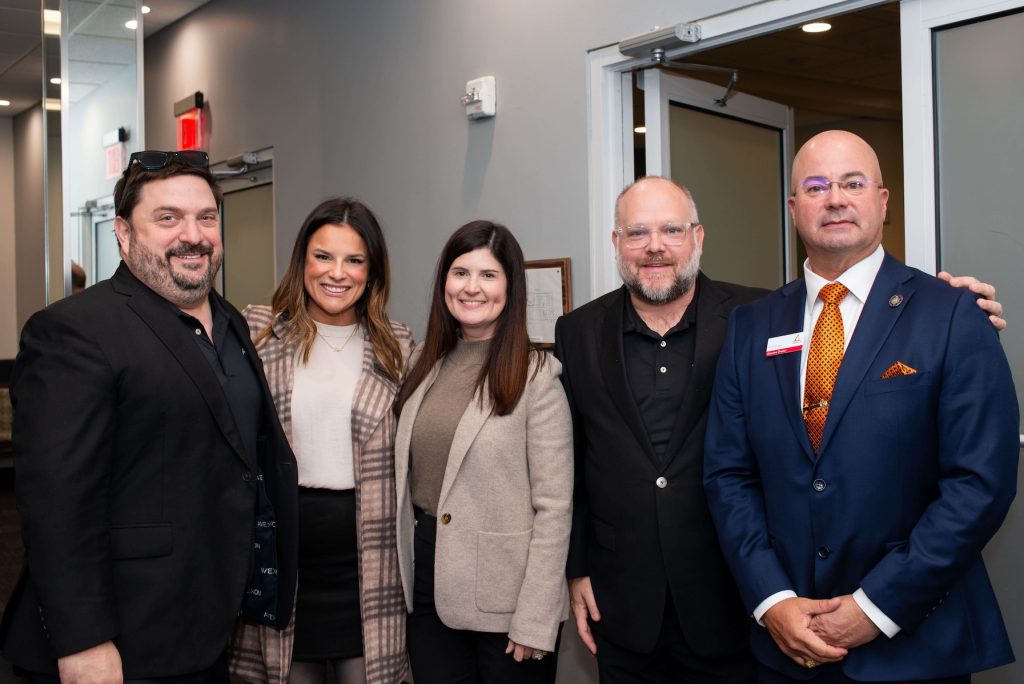
GCBC also shared an update on a separate (and equally timely) initiative: an AI-focused Executive Leadership Academy in partnership with The University of Southern Mississippi.
The framing resonated with many in the room: AI is no longer just an IT tool—it’s increasingly shaping decisions, priorities, and outcomes, sometimes before leaders realize it. This program is designed to equip senior leaders to govern, deploy, and lead with AI as a strategic advantage.
Learn more and apply for the GCBC-USM Executive Leadership Academy here.
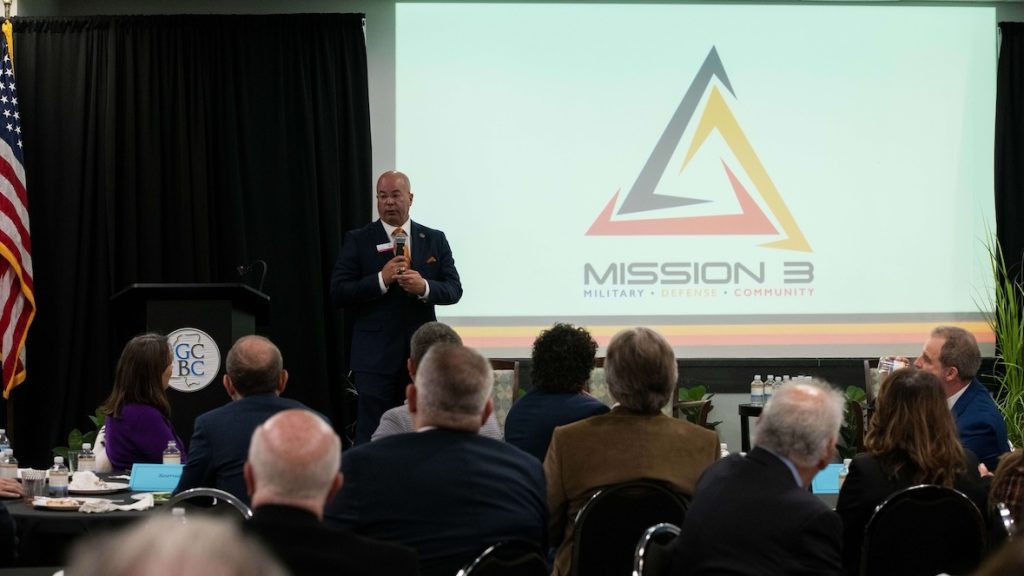
Mission 3: Strengthening The Defense Ecosystem Through Coordination
Before panels began, attendees heard a brief update from Paul Drake, Executive Director of Mission 3, the region’s newly formed military and defense community support organization.
Mission 3’s role is not to replace existing chambers, economic development offices, or military support groups. Instead, it aims to connect and coordinate military, government, industry, and community stakeholders—reducing siloed efforts and strengthening strategic continuity over time. A key takeaway: Mission 3 intends to make it easier for businesses and organizations to engage with the Coast’s defense ecosystem, and to translate that engagement into long-term economic benefit.
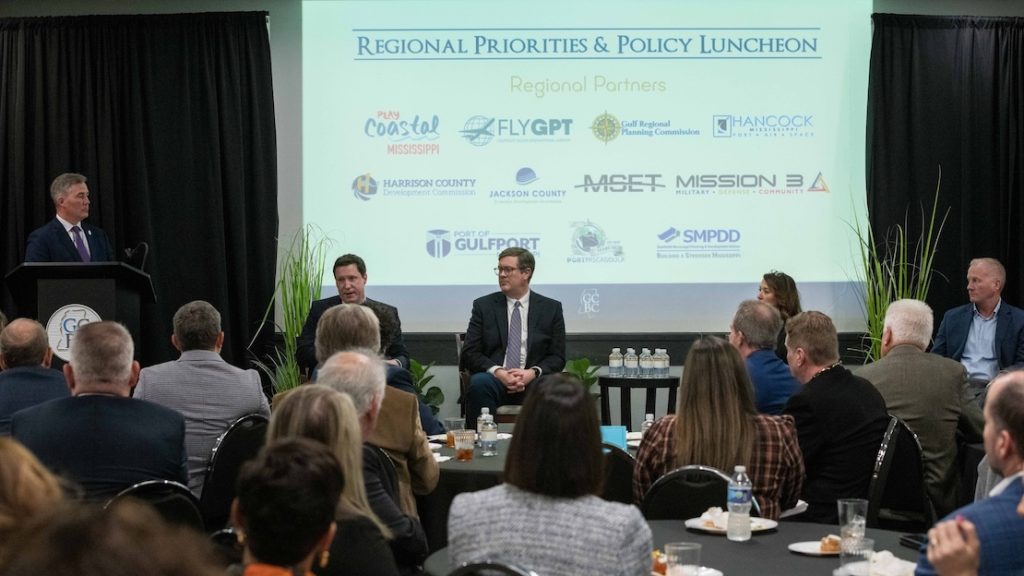
Panel 1: Regional Partners And The “How” Behind The Work
The first panel featured regional partners whose work often operates behind the scenes—but impacts daily life and long-term competitiveness across the Coast:
- Kenneth Yarrow, Gulf Regional Planning Commission
- Krystyn Gunter, Southern Mississippi Planning and Development District
- Davis Pace, The Mississippi Enterprise for Technology
- Clay Williams, Gulfport-Biloxi International Airport
Key highlights included:
Transportation and federal eligibility
Yarrow emphasized the role of the region’s metropolitan planning organization in keeping the Coast eligible for federal transportation dollars—through required plans, public review, and processes that unlock funding and keep projects moving.
Workforce pipelines and second-chance hiring
Gunter shared updates on workforce efforts across the district, including reentry programs aimed at reducing recidivism and building employment pathways for returning citizens, plus career coaching in public high schools focused on ensuring graduates are enrolled, enlisted, or employed. She also referenced new funding tied to shipbuilding workforce needs and training partnerships with regional employers and education institutions.
Space, technology, and growing Mississippi’s opportunity set
Pace described how MSET leverages federal assets and research—particularly connected to Stennis Space Center—to attract companies and create new business activity in Mississippi. He also discussed momentum in aerospace and defense, including the creation of a statewide trade association and increased interest from outside organizations looking to do business in the state.
Air service, infrastructure, and economic impact
Williams shared encouraging performance and impact data, including increased passenger traffic and an economic impact study conducted with The University of Southern Mississippi. The study cited a $469 million economic impact and approximately 1,300 jobs connected to airport activity (including both the commercial and military sides of the joint-use facility). He also previewed ongoing infrastructure upgrades at the terminal and the importance of runway redundancy to support future growth.
Across all four panelists, one shared request rose to the top: partnerships. Whether applying for grants, building workforce pipelines, or expanding infrastructure, visible collaboration strengthens funding applications, accelerates progress, and improves outcomes.
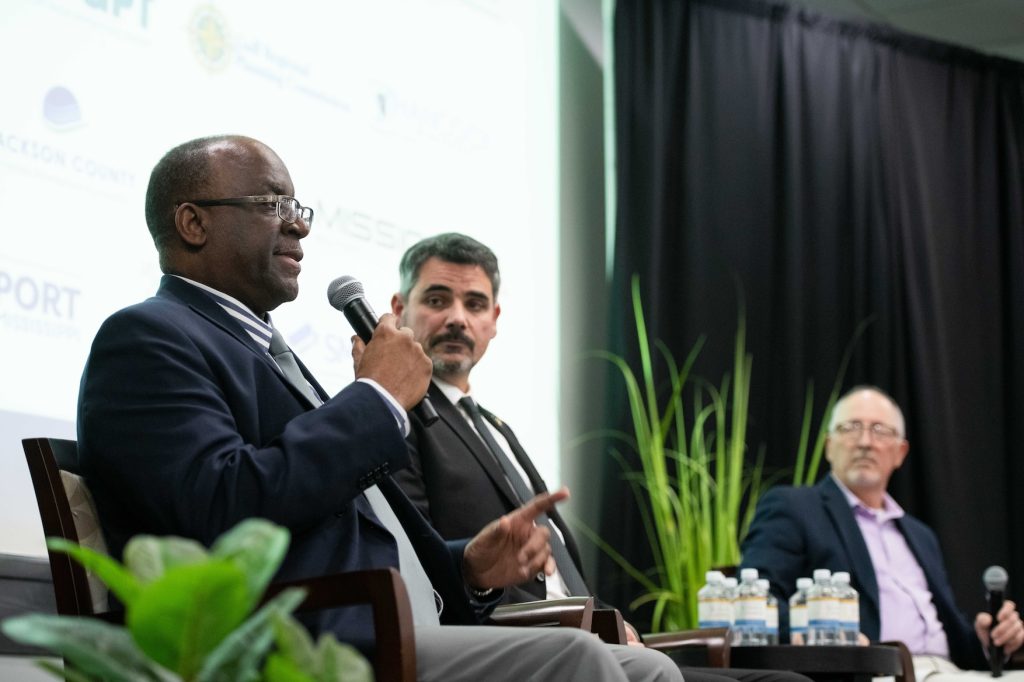
Panel 2: County Leadership, Quality Of Life, And Practical Collaboration
The second panel brought together the presidents of the Boards of Supervisors from each coastal county:
- Dan Cuevas, President – Harrison County Board of Supervisors
- Ennit Morris, President – Jackson County Board of Supervisors
- Scotty Adam, President – Hancock County Board of Supervisors
The conversation focused on what county leadership looks like in practice: trust, consistency, breaking down silos, and supporting teams that deliver essential services.
Several tangible examples stood out:
Hancock County city collaboration
Adam described proactive relationship-building with municipalities and a commitment to sharing resources, including returning road-and-bridge funds to cities and partnering on infrastructure and ARPA-related projects.
Harrison County mental health diversion center
Cuevas highlighted a major quality-of-life investment: a diversion center designed as a single point of entry for first responders, reducing pressure on emergency rooms and expanding appropriate care options. The facility includes space intended for stabilization and short-term support, with additional bed capacity for those needing a higher level of care.
Jackson County infrastructure and community response
Morris emphasized a practical focus on roads, drainage, and identifying critical areas before problems escalate. He also referenced cold-weather response efforts, including warming centers and community coordination during unusual winter conditions.
When asked what support they need from the business community, the answers were grounded and consistent: reinvestment, insight and feedback, and partnership. The message was not “watch us work,” but “work with us.”
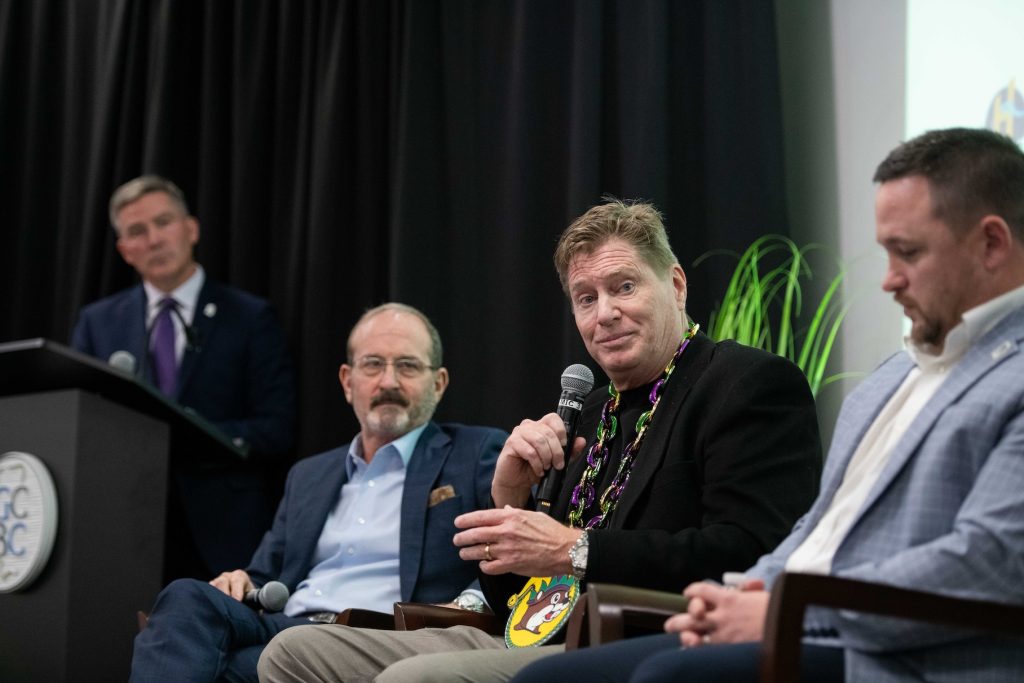
Panel 3: Economic Development, Site Readiness, And Making The Most Of GCRF
The final panel turned to economic development and the challenge (and opportunity) of preparing the Coast to compete:
- Bill Lavers, Executive Director – Harrison County Development Commission
- Blaine LaFontaine, Executive Director – Hancock County Port & Harbor Commission
- George Freeland, Executive Director – Jackson County Economic Development Foundation
A major thread: GCRF works best when it supports long-term capacity, not one-off wins.
Panelists underscored how “transformation” in economic development is often incremental—built through years of site readiness work, utilities, permitting, due diligence, and infrastructure investment. They discussed the complexity of coastal site development (including environmental and wetlands considerations), and the importance of being able to respond quickly when opportunities emerge.
They also stressed a coastal reality that deserves more public understanding: each county has unique assets, and many projects naturally fit one area better than another. Collaboration isn’t optional—it’s built into how real projects move, from lead generation to landing.
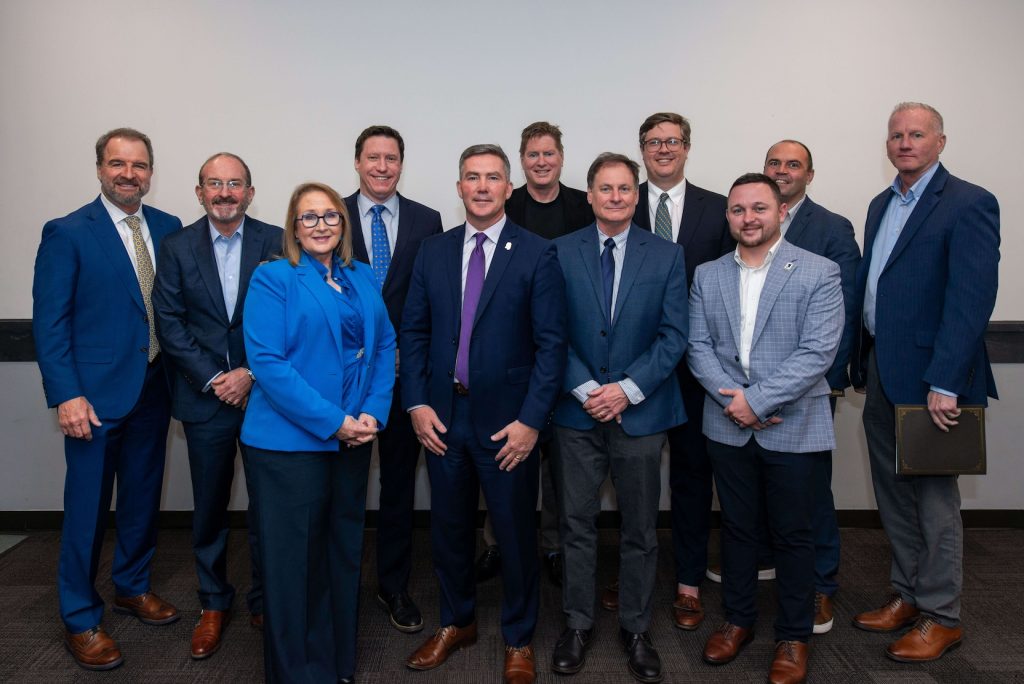
Turning Shared Priorities Into Shared Momentum
This sold-out luncheon wasn’t just a kickoff to the year. It was evidence of something stronger: a regional appetite for coordination, for practical solutions, and for leadership that doesn’t wait on someone else to go first.
GCBC will continue bringing partners to the table, sharing legislative updates, and creating space for the kinds of conversations that lead to action. Because the Coast’s competitive advantage isn’t just a list of assets—it’s what happens when we align, lead, and follow through together.
Up next: GCBC will continue the 2026 policy and priorities conversation in February with a state-level perspective on economic development, and additional meetings planned to dive deeper into tourism and ports.
